Press BrakesFiber Laser CuttingPanel BendersAutomation

Multi-function metal processing

Ironworkers

Punch, shear and notch with a multi-station hydraulic ironworker configured for your workshop.
Ironworker Machine

Selection comparison

Choose an ironworker by the tasks it must cover

The seven Q35Y models span 50–250 tonnes. The plate-shearing figures are specified for material strength up to 450 N/mm². Select the model, operation and tooling together.

Required task

Match on the model sheet

Check in the workshop

Punching

Match on the model sheet

Material, thickness, hole size and the punching-station data.

Check in the workshop

Tooling, workpiece access, positioning and support.

Flat-plate shearing

Match on the model sheet

Plate material, thickness and cut size.

Check in the workshop

Blade setup, presentation of the workpiece and offcut removal.

Profile cutting

Match on the model sheet

The section shape, material and profile-station capacity.

Check in the workshop

Tooling, section support and access around the station.

Notching

Match on the model sheet

Notch shape, size, material and the notching-station limits.

Check in the workshop

Workpiece clearance, support and scrap removal.

Select one model that covers every required task. Validate the largest task, tooling changes and complete operating sequence.

Ironworker Machine

Model: Q35Y

Ironworker Machine

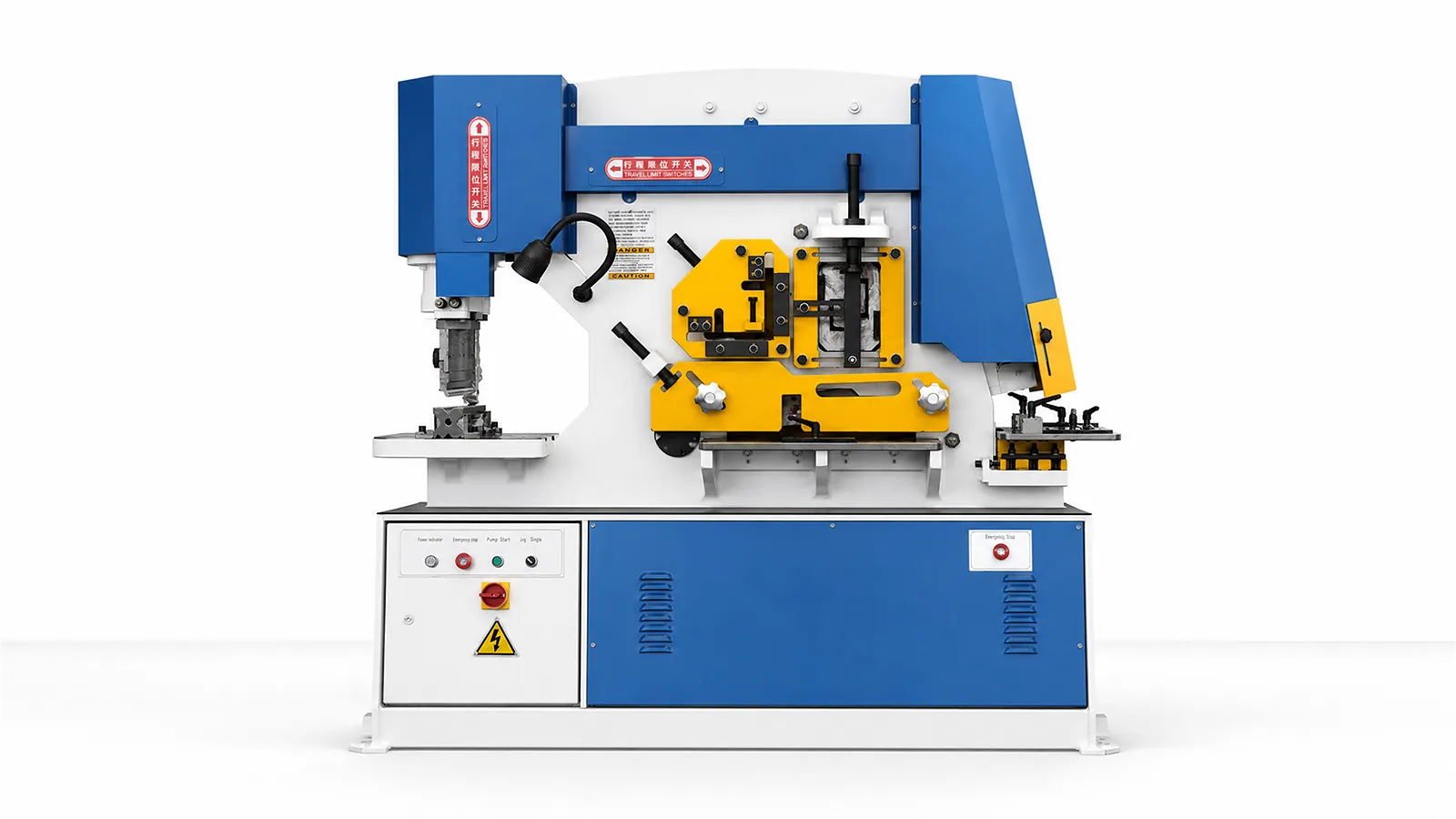
Hydraulic punching, shearing and notching for plate and profiles, with a material-retaining device. Tooling and section capacity depend on the Q35Y model.
Q35Y-60 shears 16 mm × 250 mm or 8 mm × 400 mm per stroke (thickness × width) within the stated material-strength limit.

Check each station’s material, section and tooling limits

Applications

Ironworker applications across the workshop

A task list is more useful than a single capacity figure. Match each punching, cutting or notching operation to the station and tooling it needs.

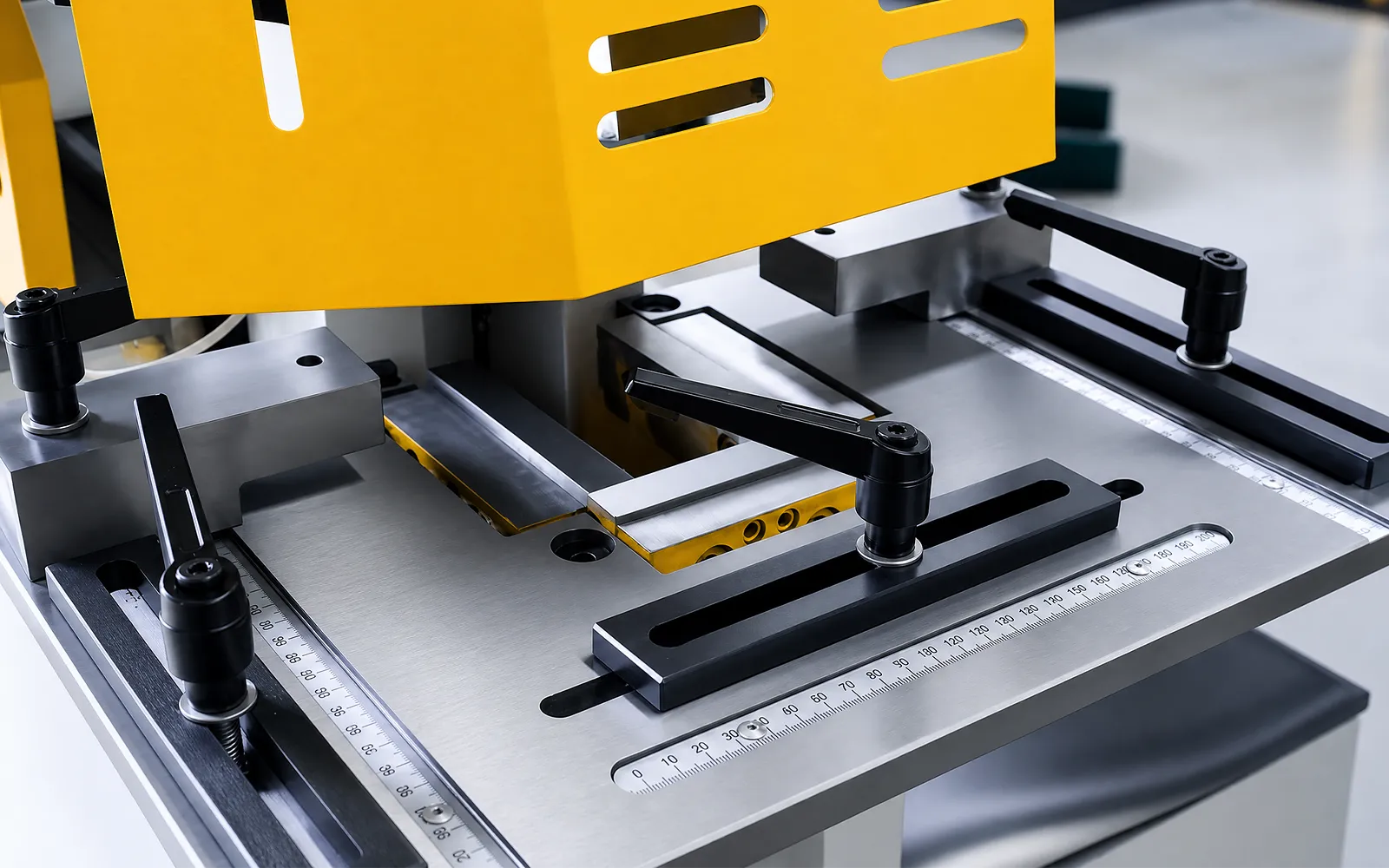
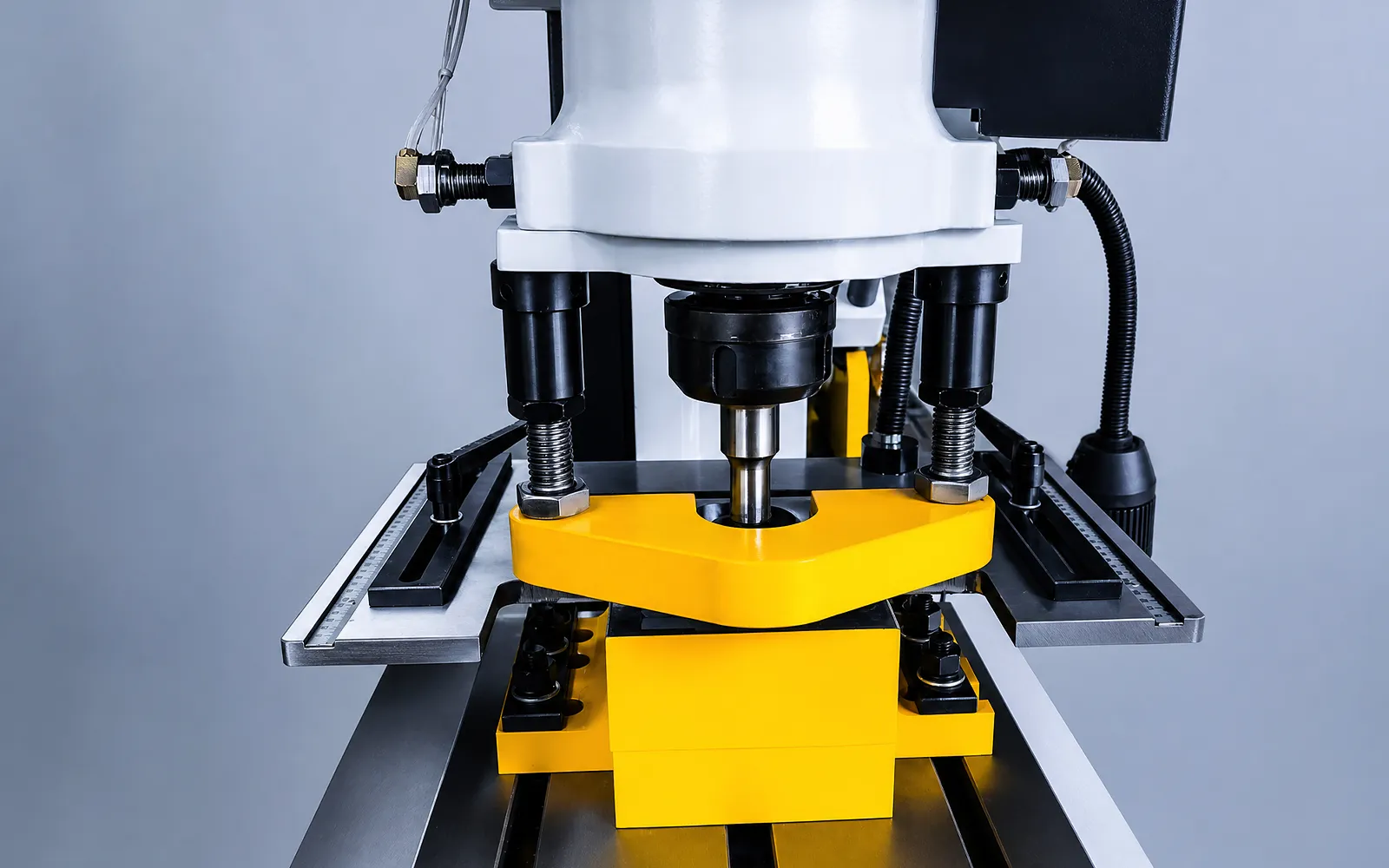
Ironworker punching station with punch, die and workpiece support

01

Punched brackets and connections

Hole diameter, material thickness and edge distance affect the punching task. Include the part support and the datum used to position repeated holes.

Review: punch-and-die selection and access to the feature.

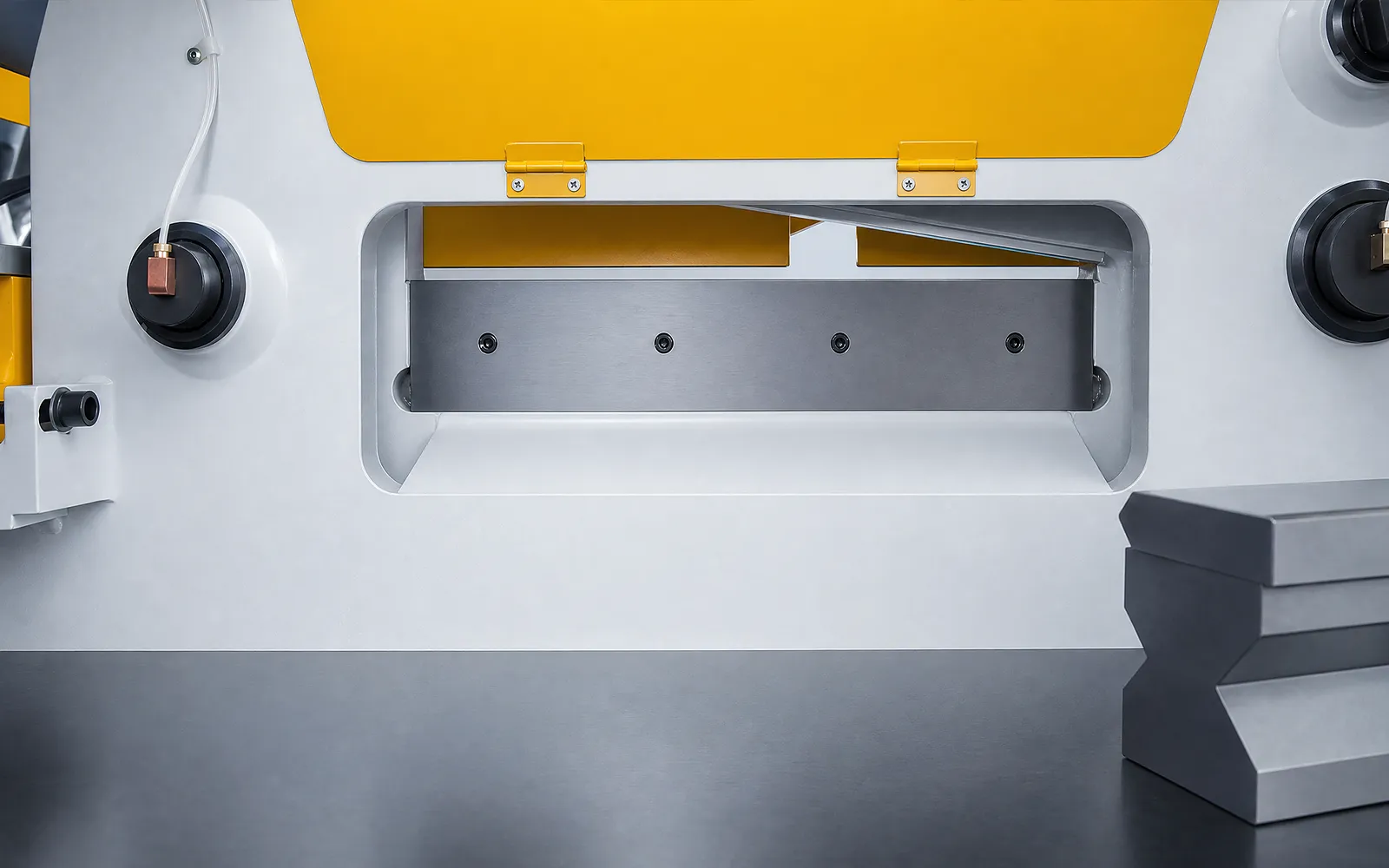
Flat-stock shearing opening and blade on an ironworker

02

Flat, angle and profile cutting

For round, square or shaped stock, identify section size, cut angle and material. Check the individual station and blade set against the selected machine.

Review: profile size, length support and cut result.

Ironworker notching table with stops and protective guard

03

Notched fabrication parts

Corners and joining features need the correct notch geometry and sufficient support during the operation. Consider movement between stations.

Review: tool shape, clearance and the next assembly step.

Application fit

Start With the Operations and Largest Workpiece

Select an ironworker from the required punching, shearing and profile tasks, together with the material, tooling and handling method.

01

Required operations

List the punching, plate shearing, profile shearing, notching or other operations required for the part.

02

Material and profile

Record the material grades, plate thicknesses and profile types and sizes that must be processed.

03

Largest task and tooling

Identify the largest hole, cut or profile task and the tooling or dies required for representative parts.

04

Workshop flow

Map part support, loading, scrap removal, operator access, available space and the intended operation sequence.

Machine in operation

See hydraulic ironworking in operation

Watch the Q35Y demonstration with an automatic feeder, then compare the stations, tooling and material-handling arrangement with your workshop tasks.

Watch on YouTube (opens in a new tab)

Buying guide

Compare the complete ironworker setup

Include the operations you perform every day and the occasional large task when reviewing the machine package.

01

Station-specific tooling

List the punches, dies and cutters required for each task. Confirm which tooling is supplied with the machine.

02

Workpiece movement

Allow space for long stock, offcuts, tool changes and operator access around each station.

03

Sustained workshop use

Discuss consumable tooling, lubrication, inspection, training and the service route for the selected model.

Buying Workflow

Move From a Task List to a Configured Ironworker

Use representative parts and formal model data to connect operation capacity, tooling, workshop flow and acceptance.

01

Task list

Provide drawings, material, profiles, dimensions, operation sequence and expected batch pattern.

02

Capacity and tooling check

Check each operation against the formal model specifications, tooling and representative workpiece.

03

Layout and handling

Map work support, operator access, tooling changes, offcuts, scrap and movement between stations.

04

Acceptance and support

Agree representative tests, guarding responsibilities, documentation, training and the service package.

FAQs

Ironworker buying questions

Assess each station, tool and workpiece against the tasks in your workshop.

Which operations can a hydraulic ironworker perform?

Q35Y combines punching, plate or profile shearing and notching. Check the stations, tools and workpiece limits of the selected model.

Explore the Q35Y working stations →
Does the punching rating also describe shearing capacity?

No. Punching, plate cutting, profile cutting and notching must be checked against their own published limits. Material strength, section shape and dimensions affect the task. Compare your largest required operation with the relevant station data.

Can I order tooling for different holes or slots?

Tooling needs to match the required feature, material and machine interface. Send a drawing showing the hole or slot, thickness, position and available access. Confirm the punch-and-die set, capacity and included tooling before assuming a feature can be produced.

Can different stations be used at the same time?

Confirm the permitted operating mode for the exact model and its safeguarding arrangement. Having multiple stations does not by itself establish simultaneous or multi-operator use. The supplied documentation and commissioning plan should define how the machine may be operated.

What information is needed for an ironworker quotation?

Send the required operations, materials, stock sizes and a drawing. Add batch sizes, tooling needs and space for handling long stock.

Review service and spare-parts support

Project enquiry

Discuss your project

Tell us what you want to make or improve. Technical details and drawings can follow.

  • Material, thickness and part size
  • Drawings and production volume
  • Location and project timing

Contact ADH

Start a machine enquiry

Name, email and a short description are enough to begin.

Contact Form