
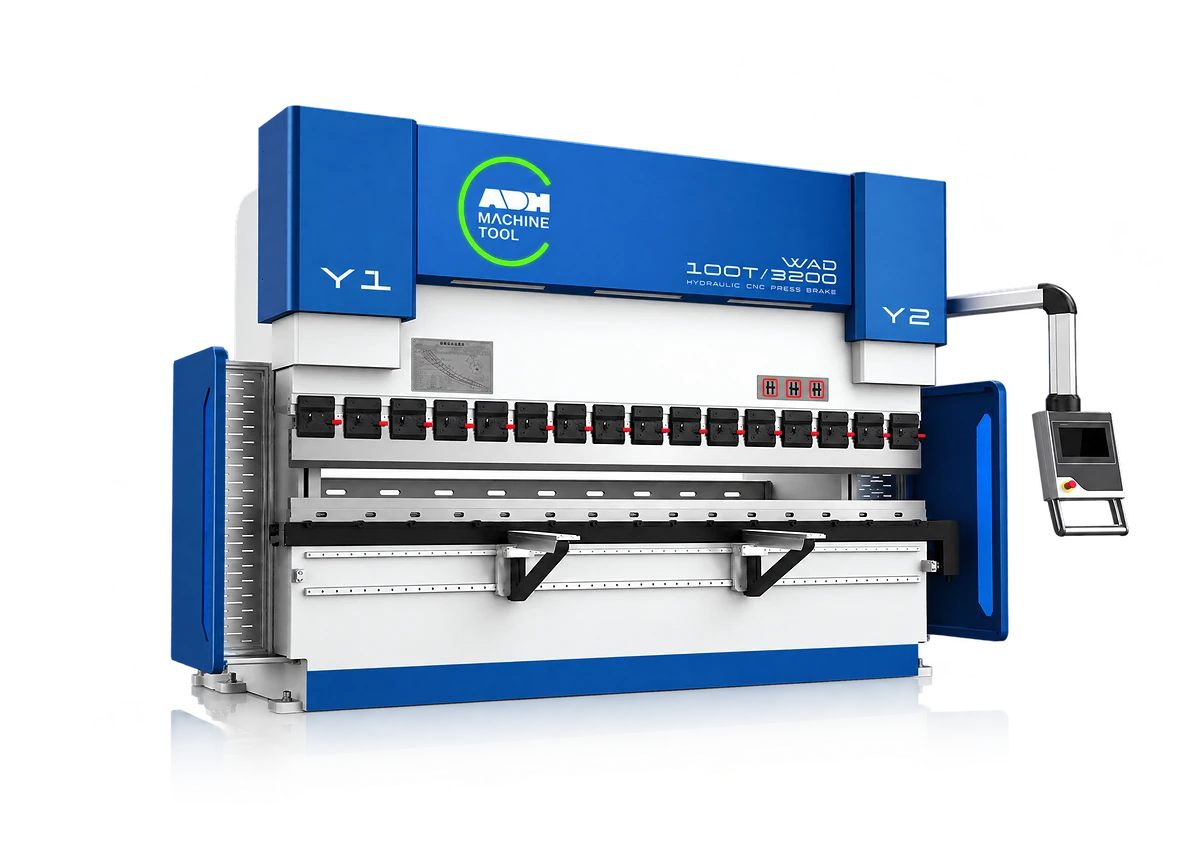
WAD · Independent Y1/Y2 control
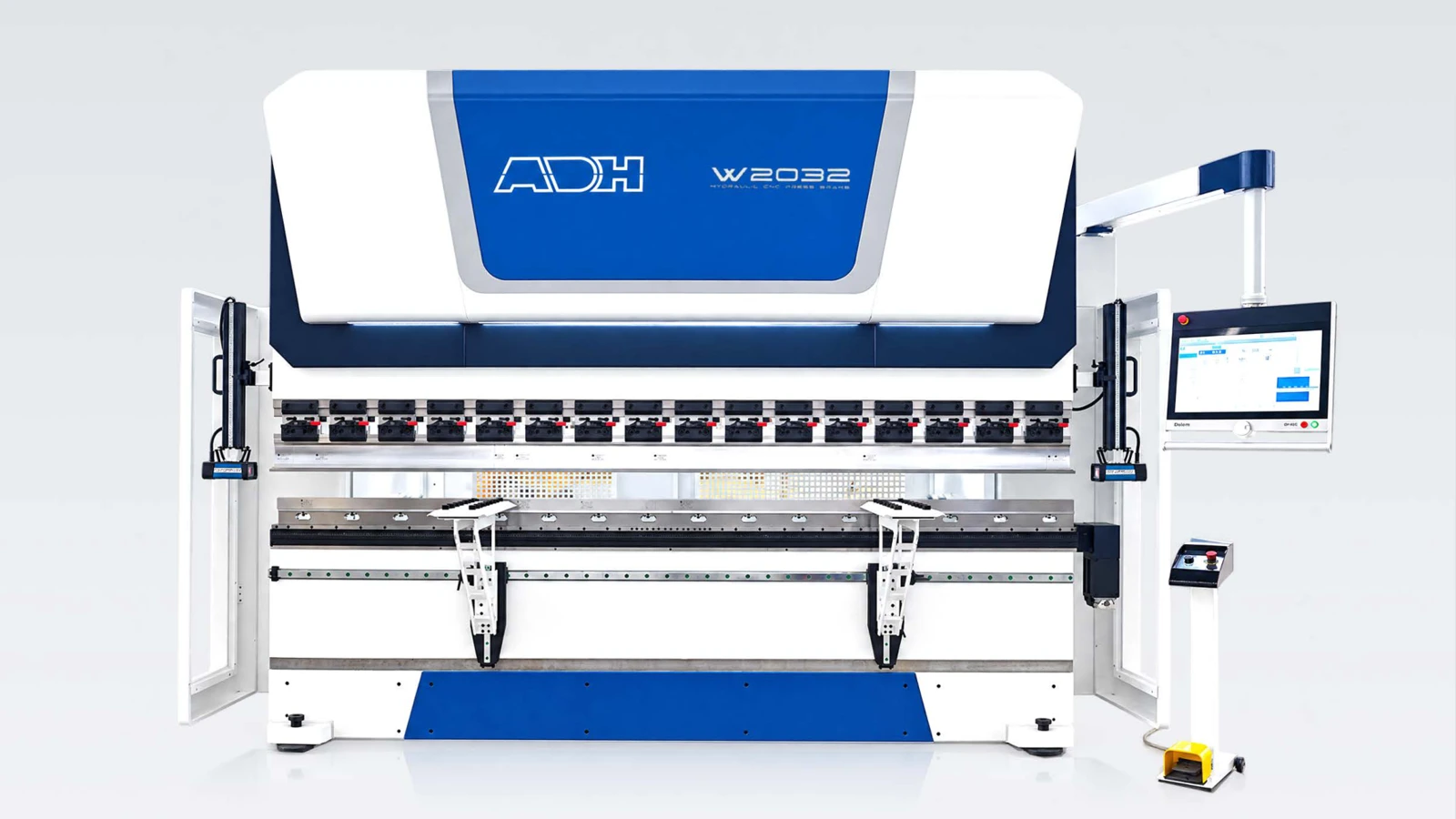
WAD: Y1/Y2 and CNC crowning
Independent ram control, configurable axes and crowning for programmed bending sequences.
Press brakes
From individual bends to automated production. Explore NC, CNC, electric and tandem press brakes for your material and part geometry.
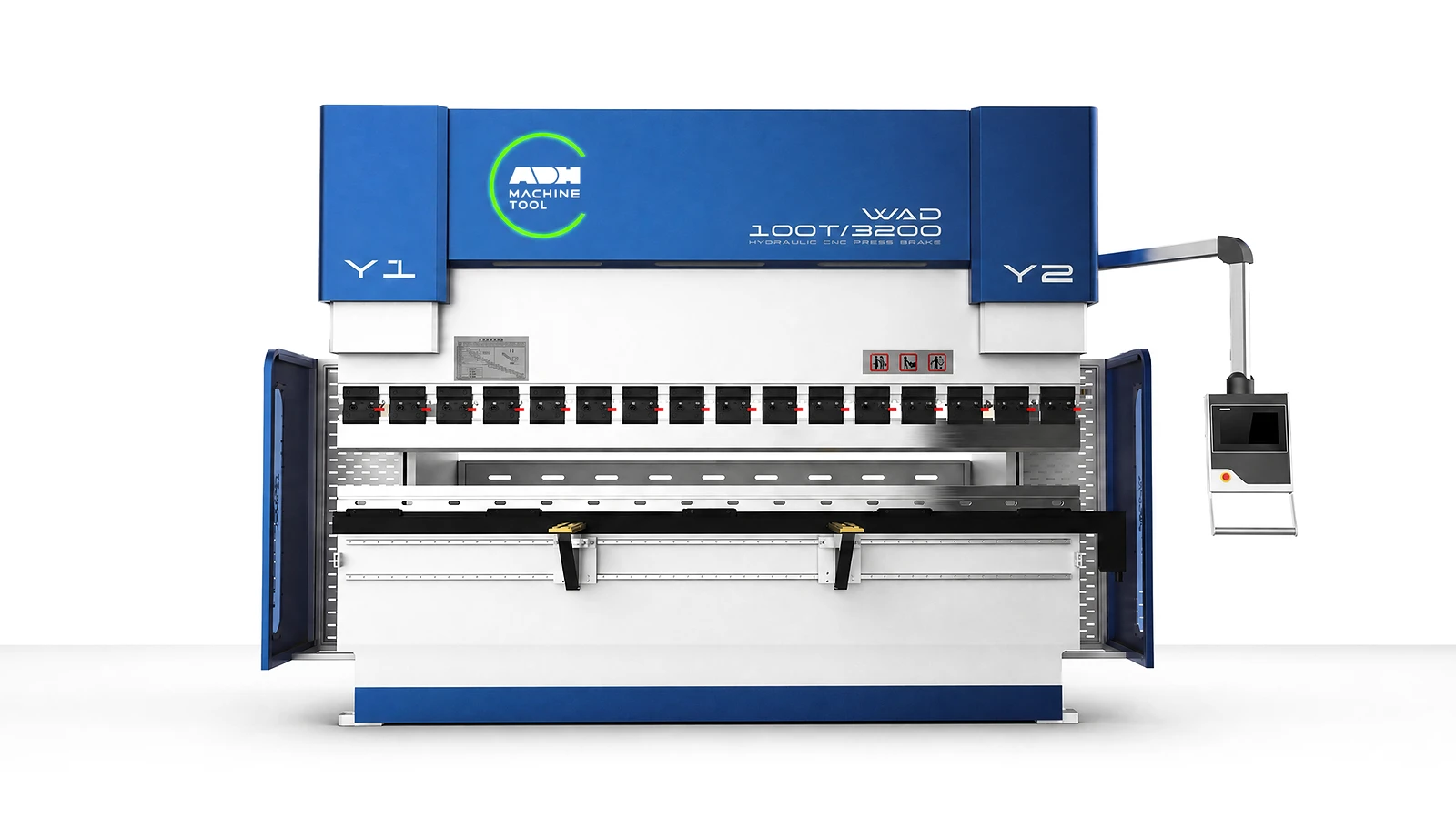
Selection comparison
Shortlist by the production task, then use the model cards below for the machine specifications.
Your priority
Start with
What separates the route
Programmed bending across varied parts
Start with
Compare WAD & WADEWhat separates the route
Compare controller workflow, positioning axes and each series’ published model table.
Defined, straightforward bending work
Start with
NC press brakeWhat separates the route
Torsion-bar synchronization with positioning and tooling matched to the bend plan.
A servo-electric production cycle
Start with
Electric press brakeWhat separates the route
Check the required force, stroke, drive duty and tooling against the WADG model.
Long workpieces or a demanding load case
What separates the route
Tandem coordinates matched hosts; a large press brake uses a single heavy-duty machine. Compare length, load, support and installation.
Automated loading, regripping and bending
Start with
Robotic bending cellWhat separates the route
The press brake, robot, handling stations and recovery sequence form one engineered cell.
These routes can overlap. Final selection follows part geometry, material, calculated force, tooling and the complete working envelope.
Machine range
Control architecture
Compare WAD and WADE by controller workflow, model range, axes, tooling, safeguarding and acceptance.
Compare WAD and WADEWAD · Independent Y1/Y2 control
Independent ram control, configurable axes and crowning for programmed bending sequences.
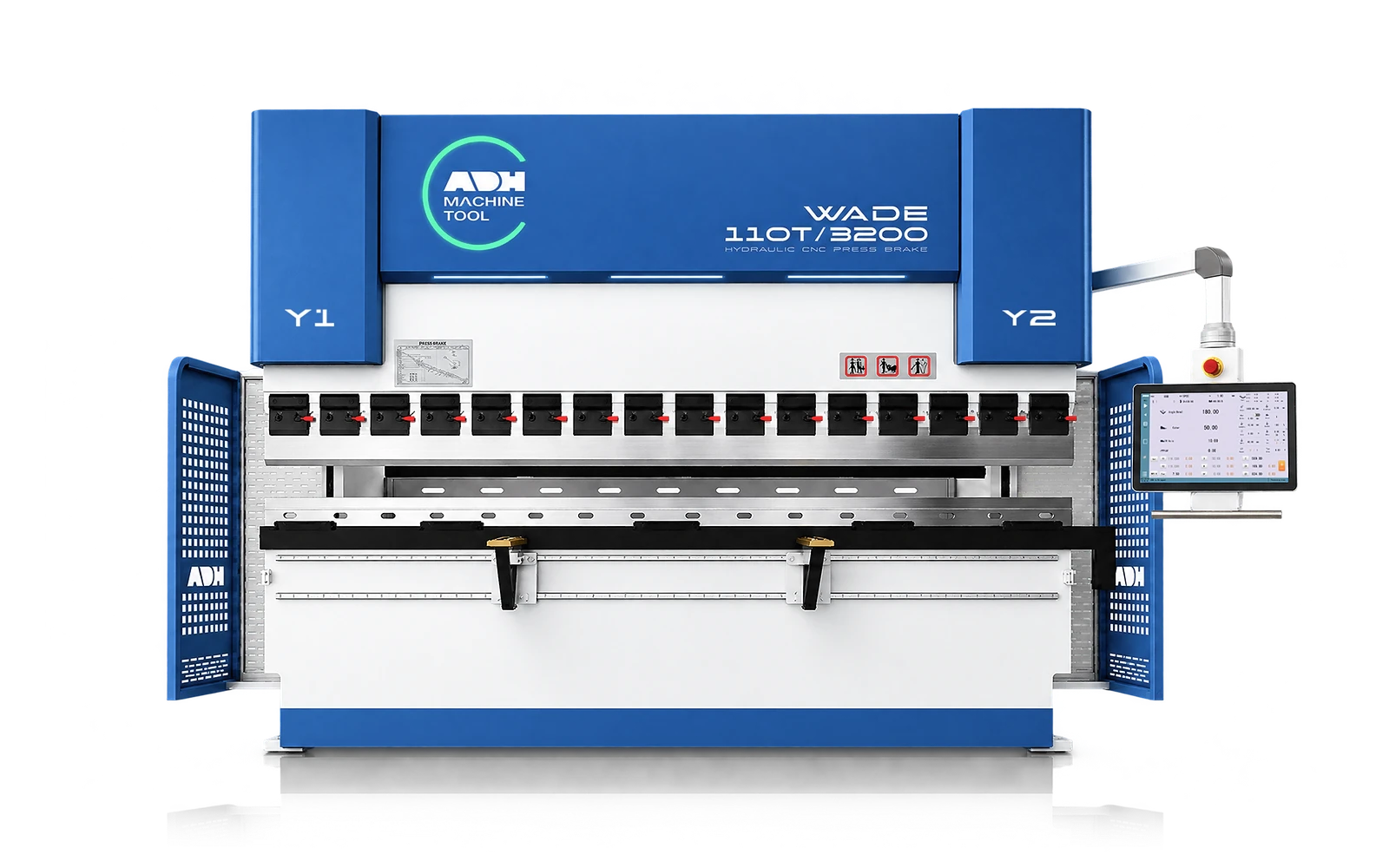
WADE · ACS controller options
ACS controllers with axis, tooling and electrical options for your bending workflow.
Explore NC for straightforward work, tandem or large machines for long or heavy parts, robotic cells for repeat production, and electric models for suitable loads and cycles.
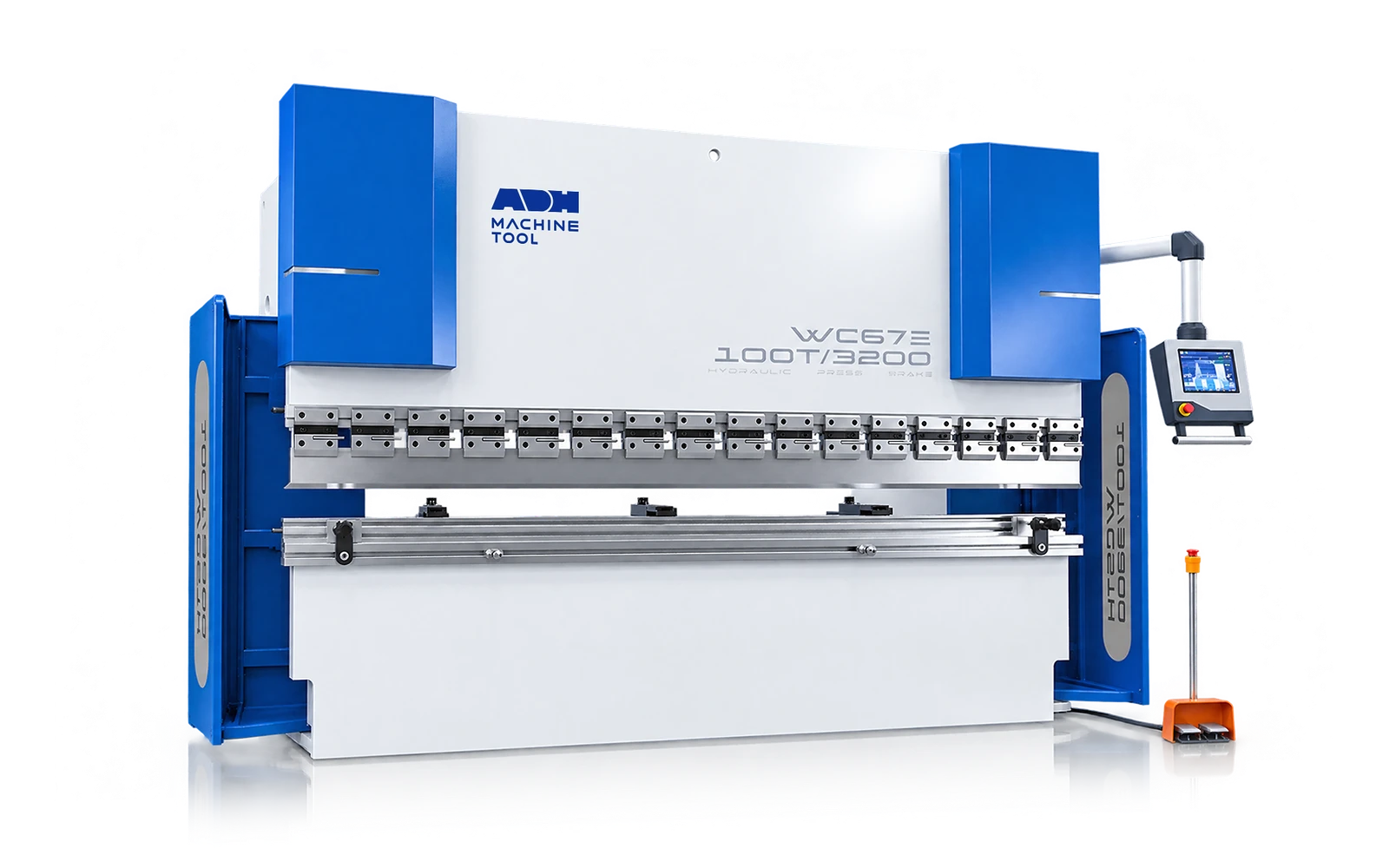
NC · Straightforward bending
Torsion-bar synchronization and straightforward positioning for defined bending tasks.
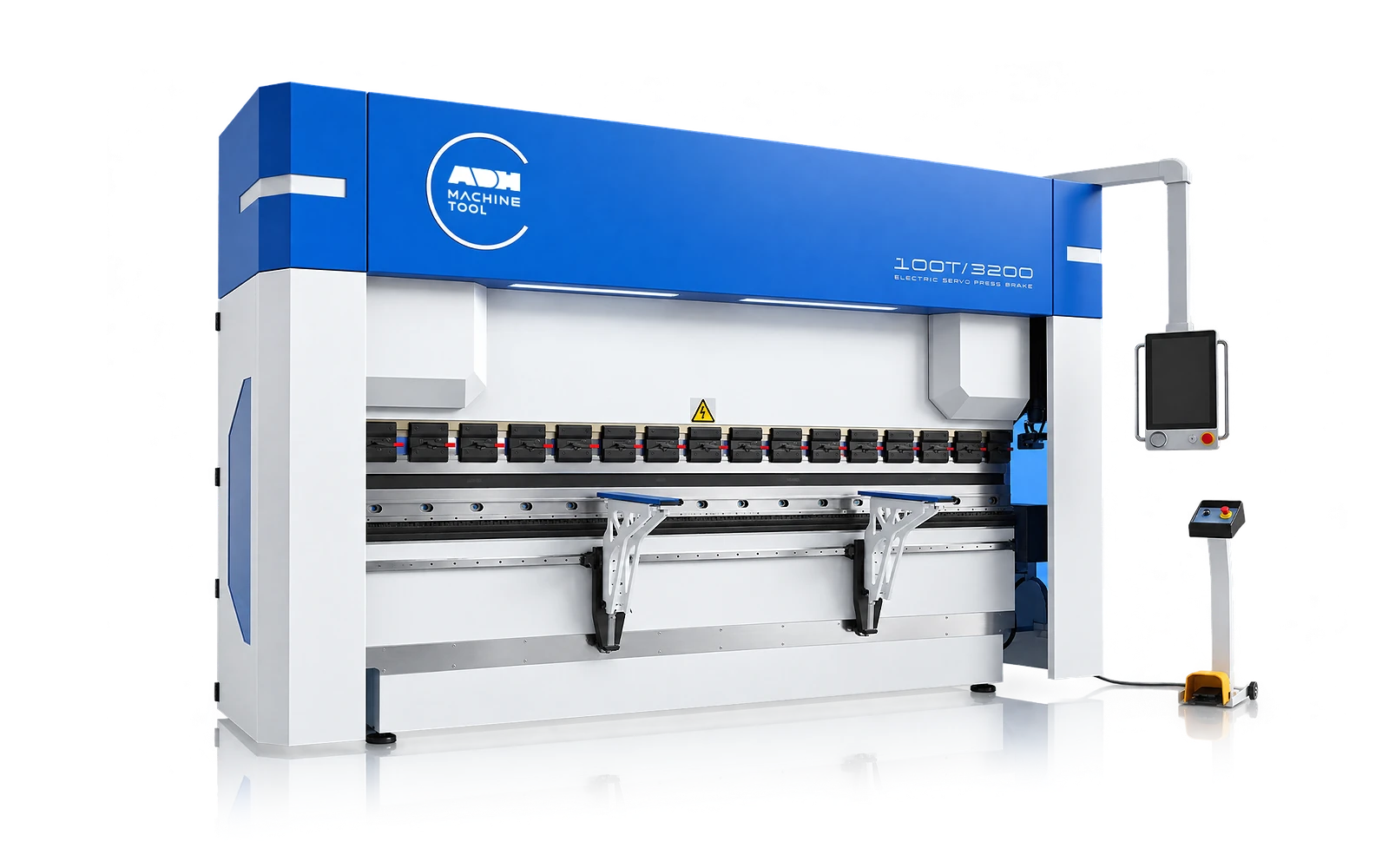
Electric · Servo-driven bending
Servo-electric bending with force, stroke, tooling and duty matched to your parts.
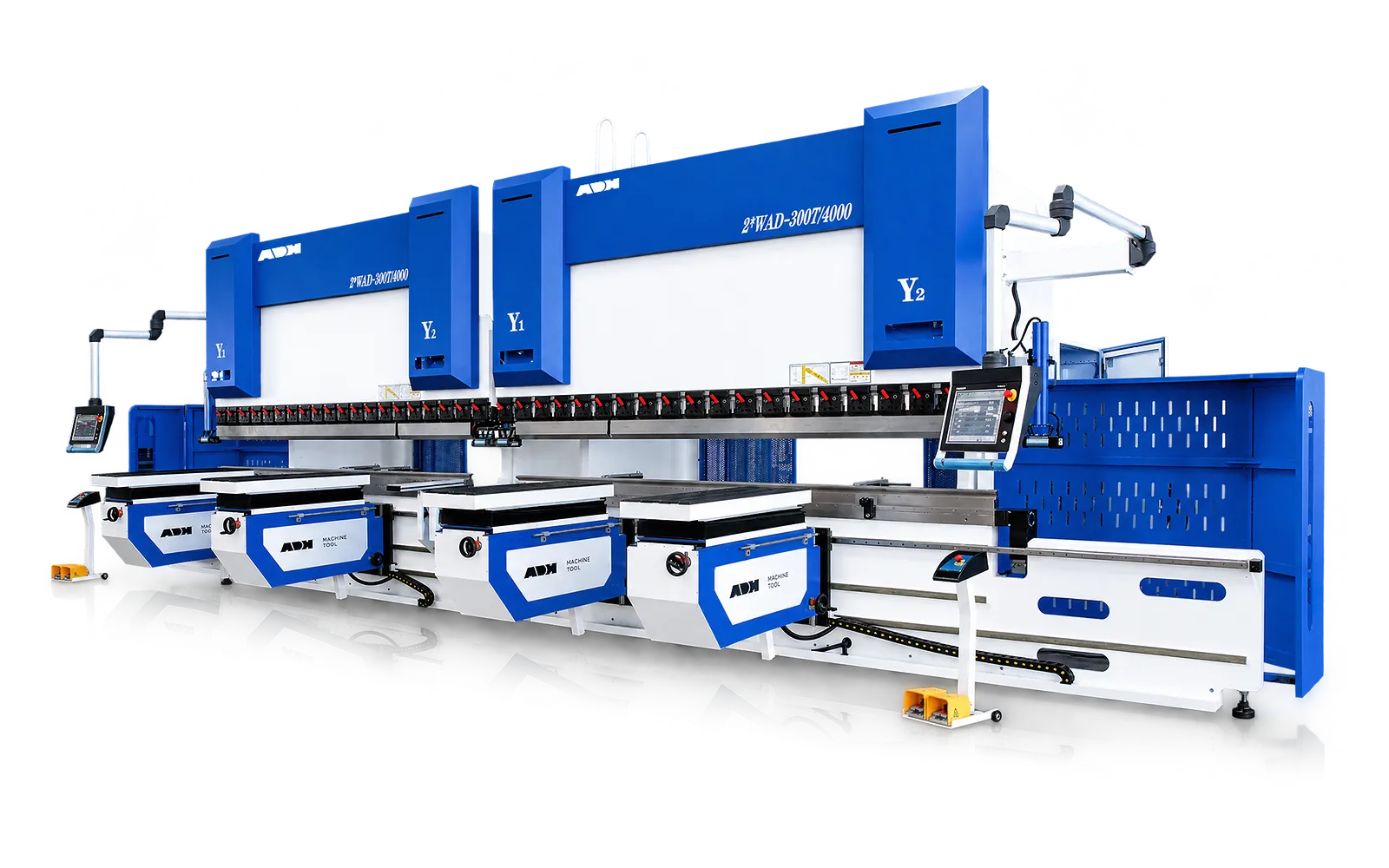
Tandem · Long-part bending
Coordinate two matched machines, controls, tooling and supports for long workpieces.
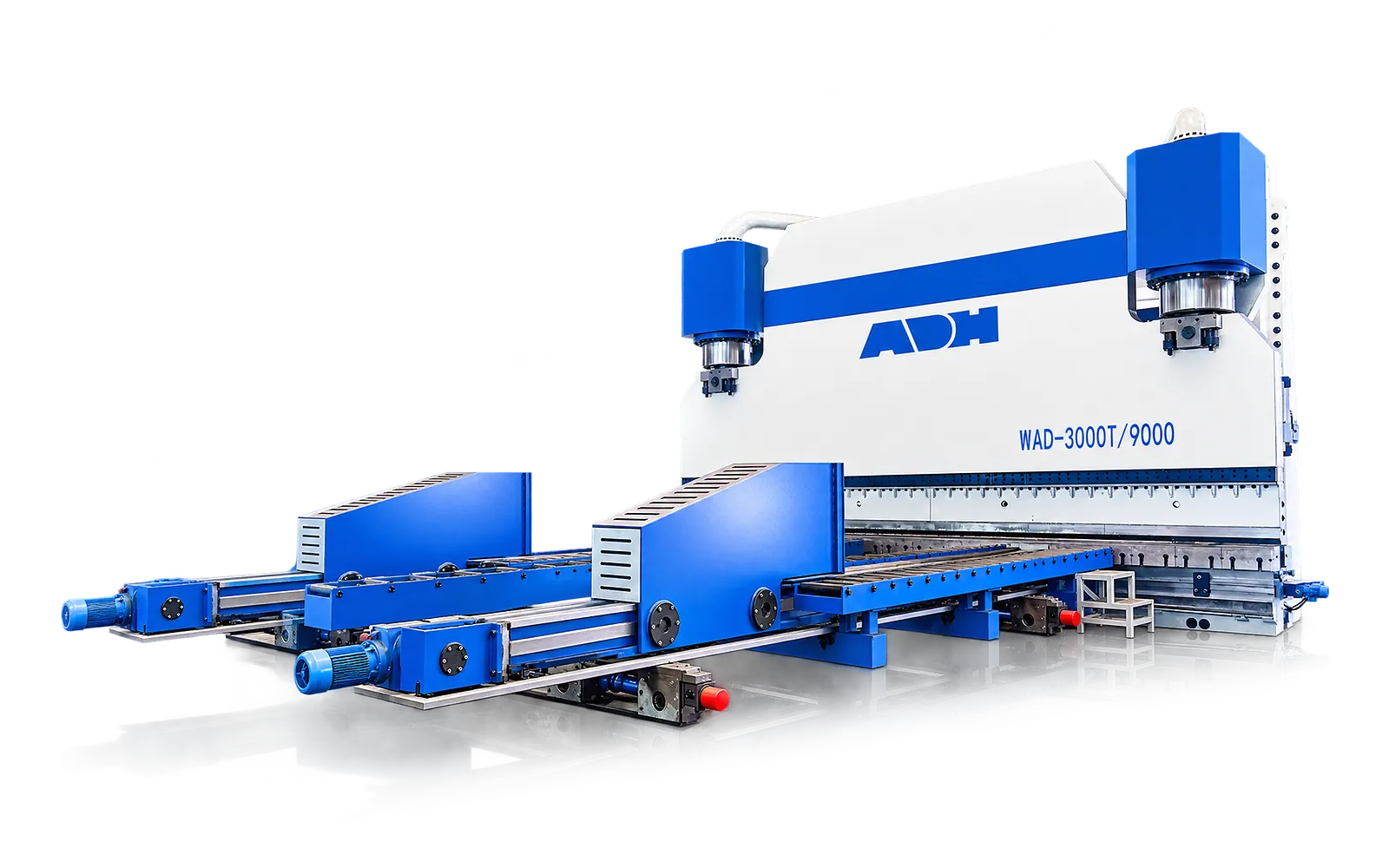
Large · Heavy-duty bending
Engineer the frame, force, compensation, tooling and handling together for long or thick plate.
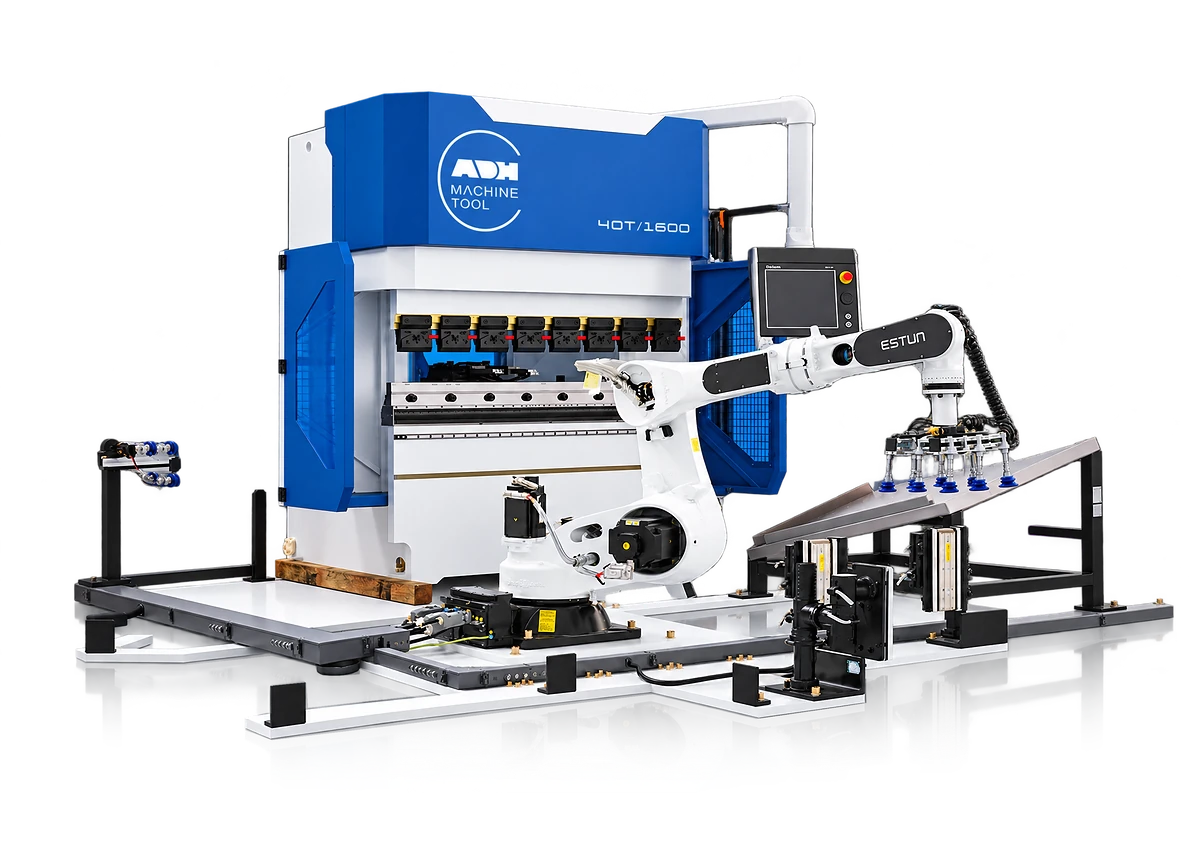
Robotic cell · Automated handling
Automate loading, regripping, bending and stacking for compatible, repeatable part families.
Hybrid · Dual servo pumps
Compare 19 WADH hybrid configurations from 70 to 300 tonnes by working length, bending force, ram stroke and open height.
Selection factor
What to provide
Maximum bend length, flange and box geometry, bend sequence, part weight, stroke/open-height needs and support points.
How it changes the route
Use one exact NC, WAD, WADE or Electric model only when its published envelope fits; review Tandem or Large for long or higher-load work.
Selection factor
What to provide
Material grade and strength, thickness range, bend length, bending method, die opening and calculated force or line load.
How it changes the route
Select from the exact model row and tooling limits; use the Large route when frame, force, compensation, foundation and handling require a project specification.
Selection factor
What to provide
Programming workflow, bend sequence, ram feedback, backgauge axes, crowning or angle control and data connections.
How it changes the route
NC covers defined torsion-bar work; WAD and WADE are separate CNC series and must be compared by controller, axes, tooling, safeguarding and acceptance.
Selection factor
What to provide
Punch and die profiles, clamping, allowable line load, crowning method, changeover and tool-clearance checks.
How it changes the route
Confirm ordered tooling with the selected host; Tandem, Large and Cell tooling must be scoped with supports, interfaces and sample validation.
Selection factor
What to provide
Part weight, rotation or regripping, front or follower support, loading/unloading, operator tasks and floor access.
How it changes the route
Standalone support may suit NC, CNC or Electric; Tandem, Large or Bending Cell needs the full handling and recovery path defined.
Selection factor
What to provide
Part mix, batch size, output target, changeover, duty cycle, staffing and upstream/downstream handoffs.
How it changes the route
Electric fits only a verified servo-electric duty; Bending Cell fits a repeatable automated part family; neither follows from headline speed alone.
Selection factor
What to provide
Representative part, angle/dimensional method, production window, guarding, training, installation and destination requirements.
How it changes the route
Record the exact model, options, exclusions and sample checks in the quotation; Tandem and Cell remain project-system specifications.
Related equipment
Compare machines, then confirm controls, positioning, handling, safeguarding and drive options in the quotation.
01 / CONTROL
Compare controls, offline programming and machine connectivity.
02 / ACCURACY
Explore backgauge, crowning and angle-measurement options for your parts.
03 / HANDLING
Plan tool changes, part support and operator controls around the bend sequence.
04 / SAFETY & DRIVE
Check safeguarding and drive options for compatibility with your machine and process.
Plan your project
A clear brief makes it easier to compare options, prepare a quotation and plan the next step.
01 / YOUR APPLICATION
Share drawings, material, thickness and production volume. Tell us where the current process needs to improve.
02 / YOUR MACHINE
Review the machine, controls, tooling and handling together. Agree the sample parts and checks for your application.
03 / YOUR PRODUCTION
Coordinate delivery, site preparation, installation and training, with the support your team will need in operation.
Your quotation or contract confirms the supplied equipment, delivery schedule, acceptance criteria, warranty and service scope.
Explore ADH manufacturing →See equipment options for the parts your industry produces.
Project enquiry
Tell us what you want to make or improve. Technical details and drawings can follow.
Contact ADH
Name, email and a short description are enough to begin.