
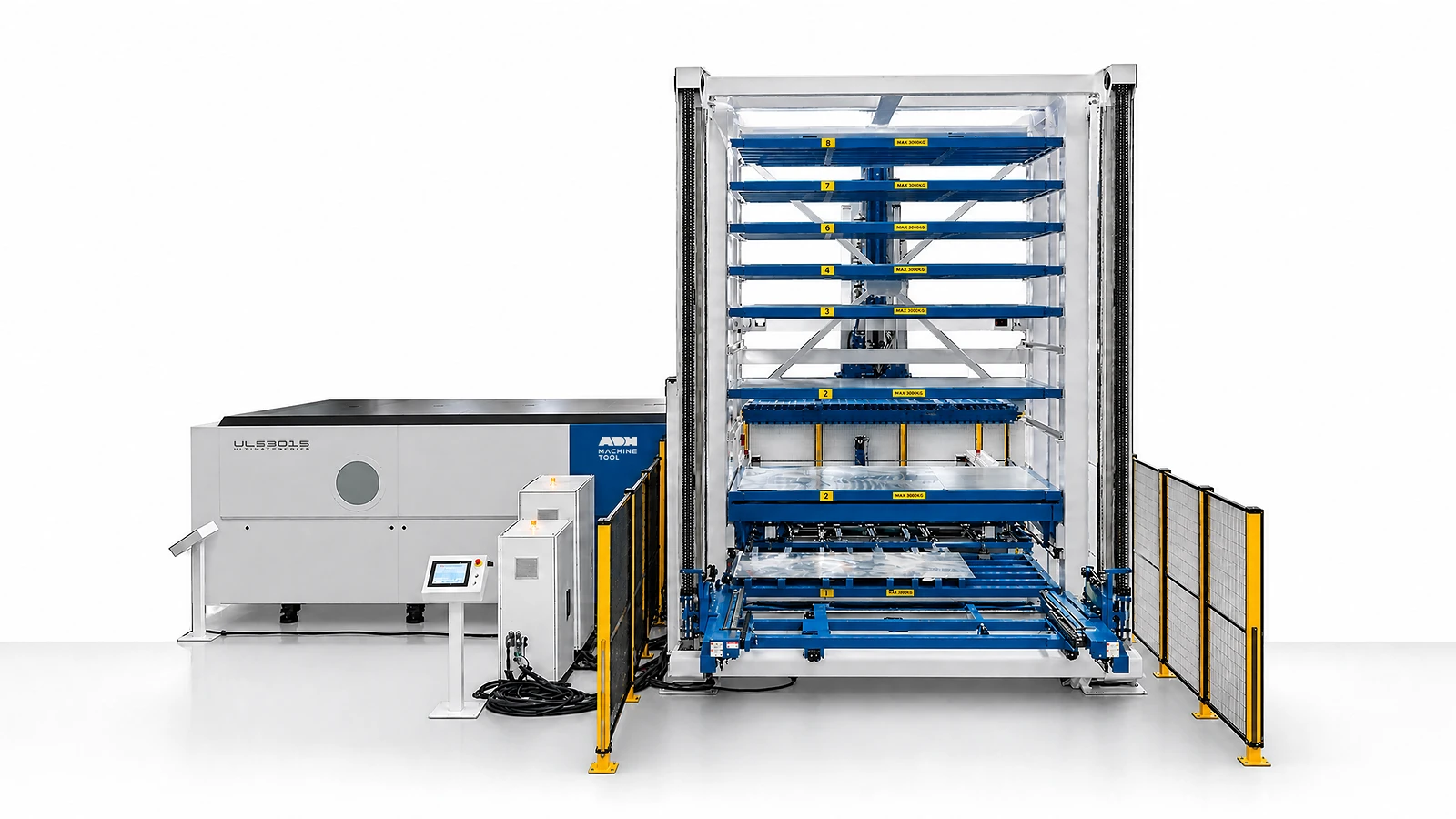
01 · Material flow
Load, cut and unload with less handling
Define storage, loading, unloading, remnants and recovery around the selected laser process.
Plan laser cutting automationSolutions
Connect cutting, forming, handling and controls into a production system designed around your parts and plant.
Production challenges
Find the challenge you need to solve, then compare equipment and automation options.
01 · Material flow
Define storage, loading, unloading, remnants and recovery around the selected laser process.
Plan laser cutting automation02 · Repetitive work
Map gripping, reorientation, tool changes, stacking and operator recovery against the real bend program.
Explore bending automation03 · Production data
Define the data, users and system connections needed for monitoring or ERP/MES integration.
Review connected production04 · Application fit
Describe your parts, materials and production volumes to start selecting equipment.
Discuss your applicationCutting and forming
Follow material through storage, cutting, sorting, reorientation and a robotic press brake.
Explore the cutting and bending lineCutting and punching
Compare EP3015 punching and GP3015 laser routes, including loading, unloading and stacking.
Explore the laser and punch lineChoose the level of automation
Identify the operation that delays production, then choose the automation needed to address it.
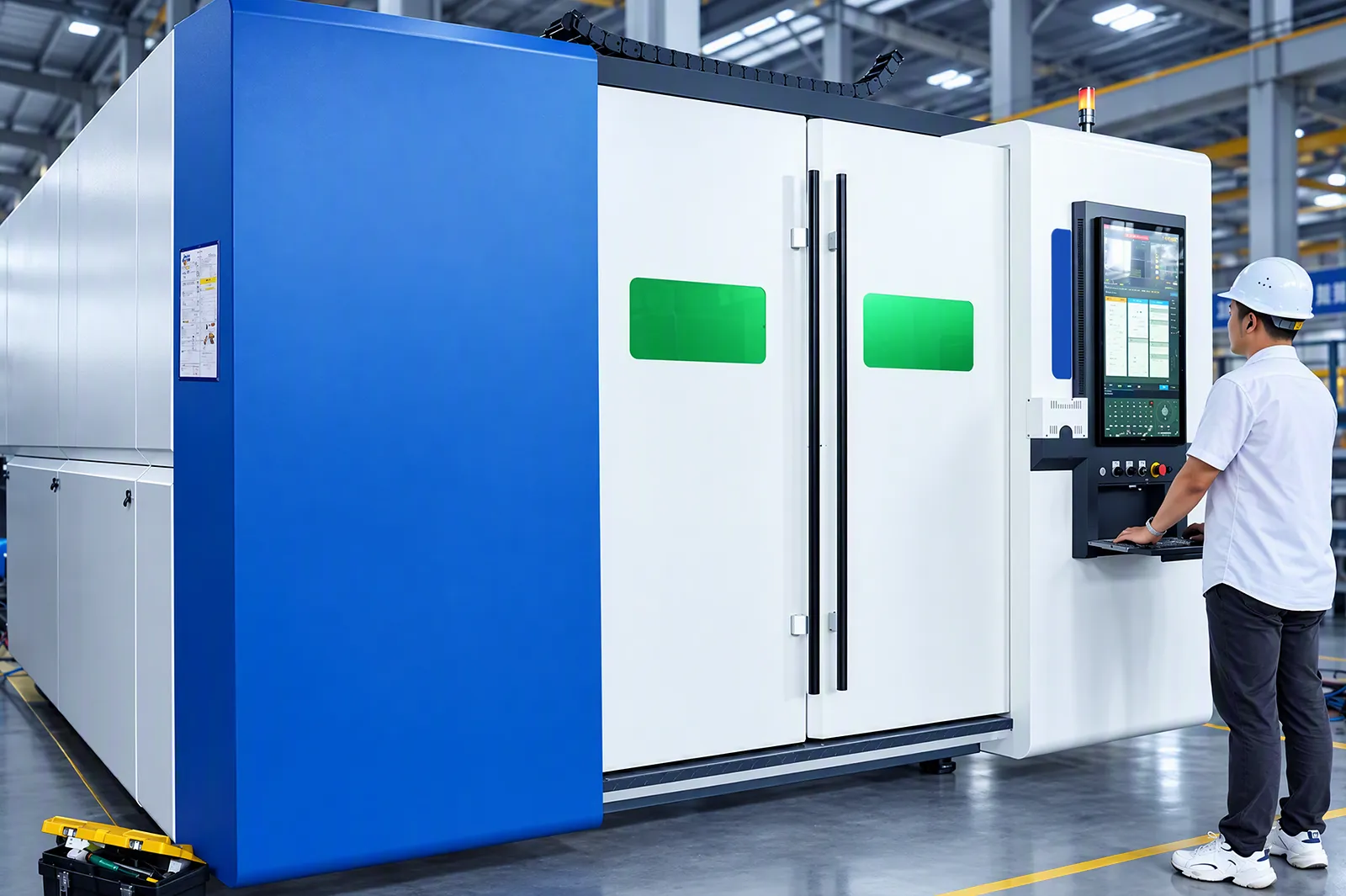
Flexible work
For varied parts and short batches, review programming, tooling, setup and operator handling first. Target the bottleneck while keeping flexibility for other jobs.
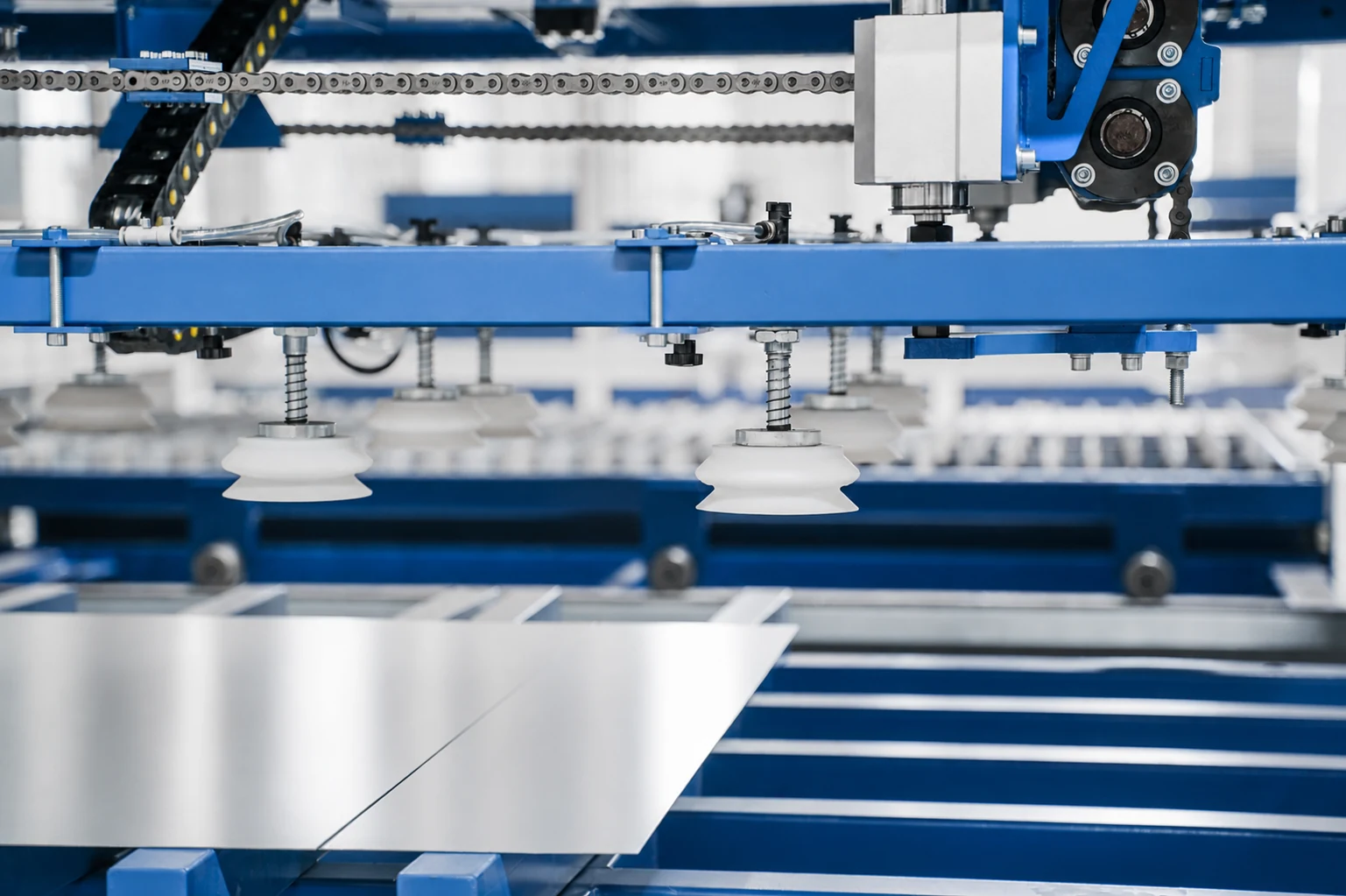
Repeated handling
Define the loading, unloading or transfer task, including exceptions and operator access. Match the handling equipment to the host machine.
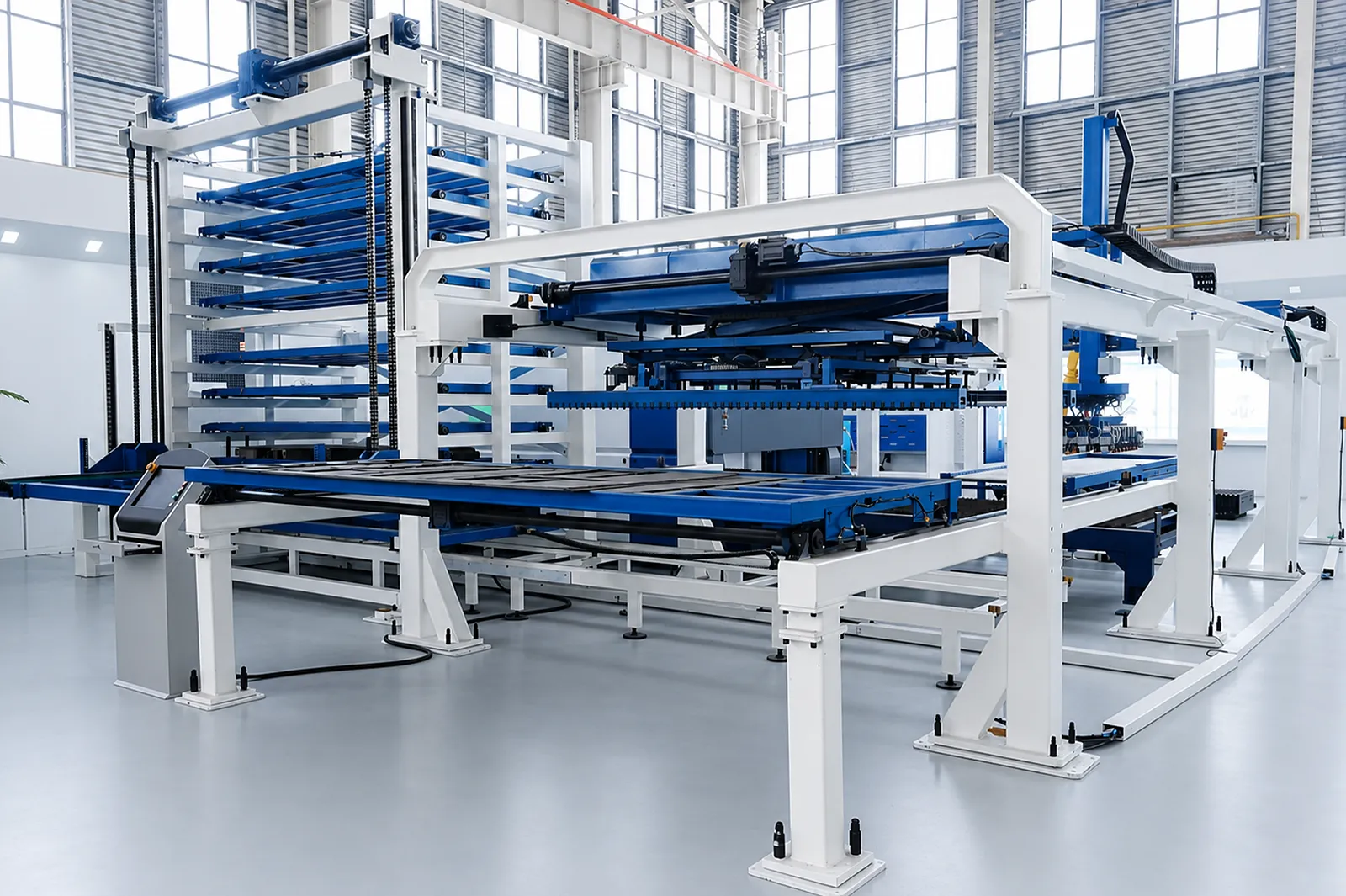
Connected production
Map storage, processing, transfers, finished parts and recovery. Assign control and safety responsibilities, then test a complete cycle with representative parts.
From brief to handover
Define the parts, configure the equipment, check the result and prepare your team.
01
Capture parts, materials, volumes, quality targets, plant limits and operator needs.
02
Match machine, controls, tooling, handling and safety choices to the working envelope.
03
Agree the first-part checks, data handoff, recovery path and acceptance record before delivery.
04
Plan training, spare parts, maintenance and future upgrades around the installed system.
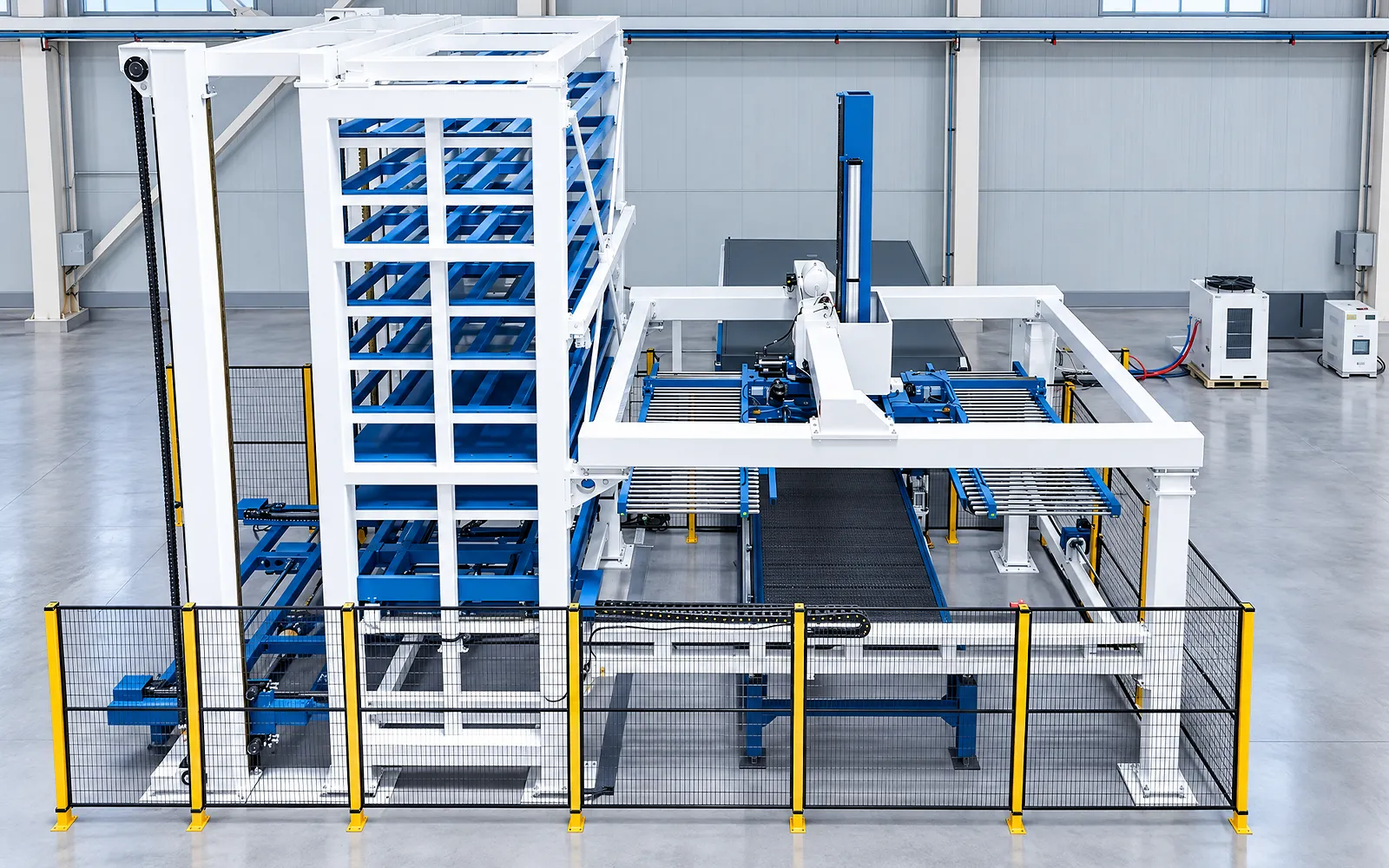
Production integration
Define the normal cycle, recovery procedures and responsibilities so your team can operate the system confidently.
Explore typical parts, production challenges and equipment choices for the work you make.
Application engineering
Tell us about your parts and production goals. Drawings, materials, thicknesses and batch sizes help ADH recommend suitable equipment.