
Enclosure panels
Map the pickup zones on each flat blank. The gripper needs a sound surface after openings are cut and enough clearance at the press brake.
Production lines · Cutting and forming
A tower feeds sheet to the laser. A sorting gripper separates the blanks, and a rail-mounted robot turns, bends and stacks the finished parts.
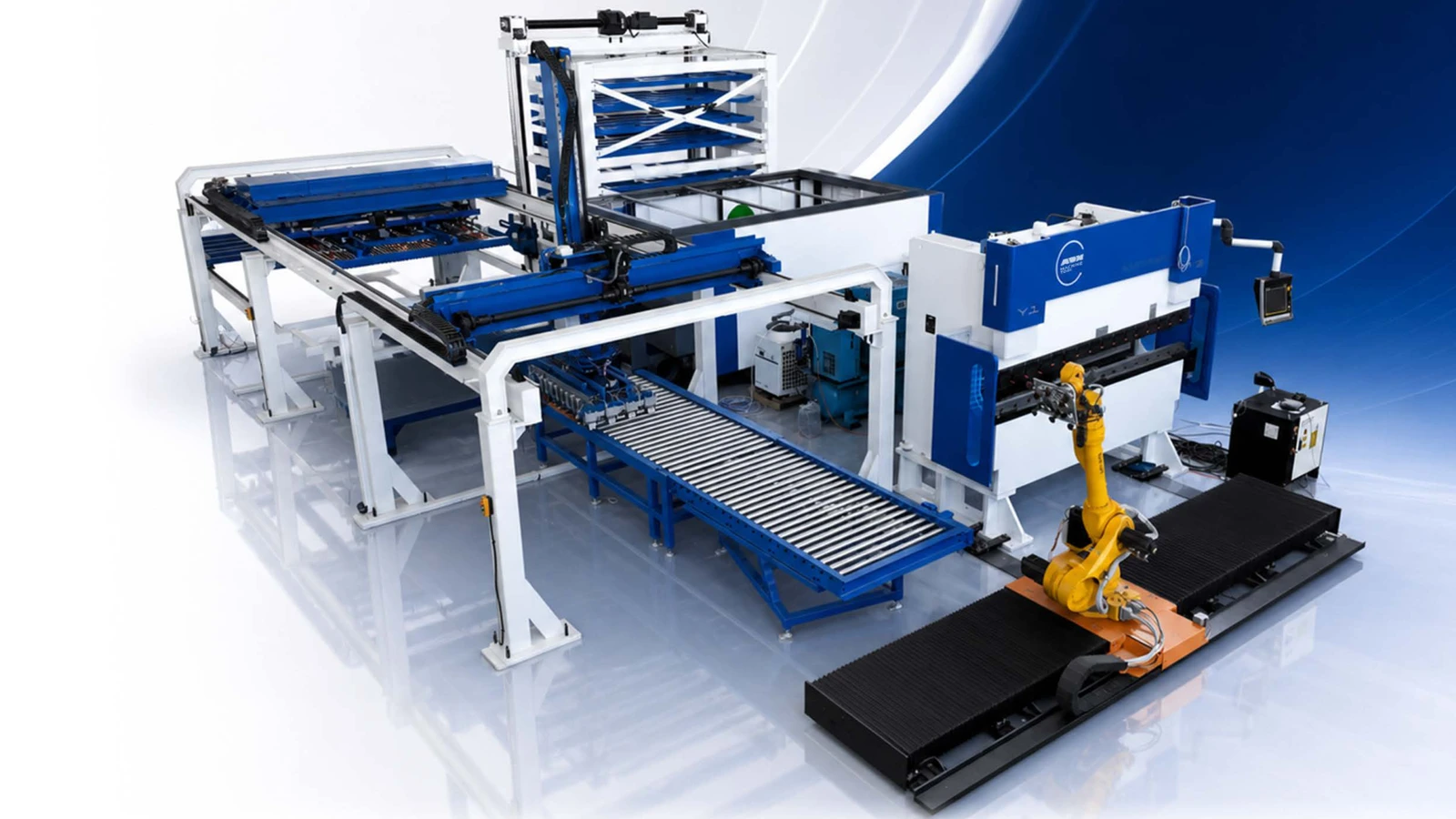
Line configuration
These values describe the line configuration shown. A robot’s payload includes the gripper. The usable part weight and reach depend on the pickup point and orientation.
| Item | Configuration |
|---|---|
| Material storage | Up to 3,000 kg per tower level in the illustrated layout |
| Sheet loading | Vacuum pickup, sheet separation and thickness check |
| Cutting and transfer | Laser cutting, part sorting, centering and turnover |
| Bending robot | 85–270 kg robot payload options |
| Seventh-axis rail | 3.8–16 m travel options |
| Plant interfaces | OPC UA, Modbus and Ethernet connectivity by configuration |
Applications
A part must work in both processes and at the handoff between them.
Map the pickup zones on each flat blank. The gripper needs a sound surface after openings are cut and enough clearance at the press brake.
Sort blanks by the next bend program and tooling setup. Small parts or parts with limited gripping area may need a separate discharge route.
A laser can release several blanks while the brake is still forming one. Size the buffer for the actual nest and the number of bends per part.
Locate suction cups and regrip points away from visible faces where possible. Inspect the part after cutting, transfer, bending and stacking.
Line in operation
Follow the material through automated loading, laser cutting and robotic bending in an ADH line. The stations below explain how the blank changes hands.
Watch on YouTube (opens in a new tab)Line stages
Each stage establishes the material identity or part orientation required by the next machine.
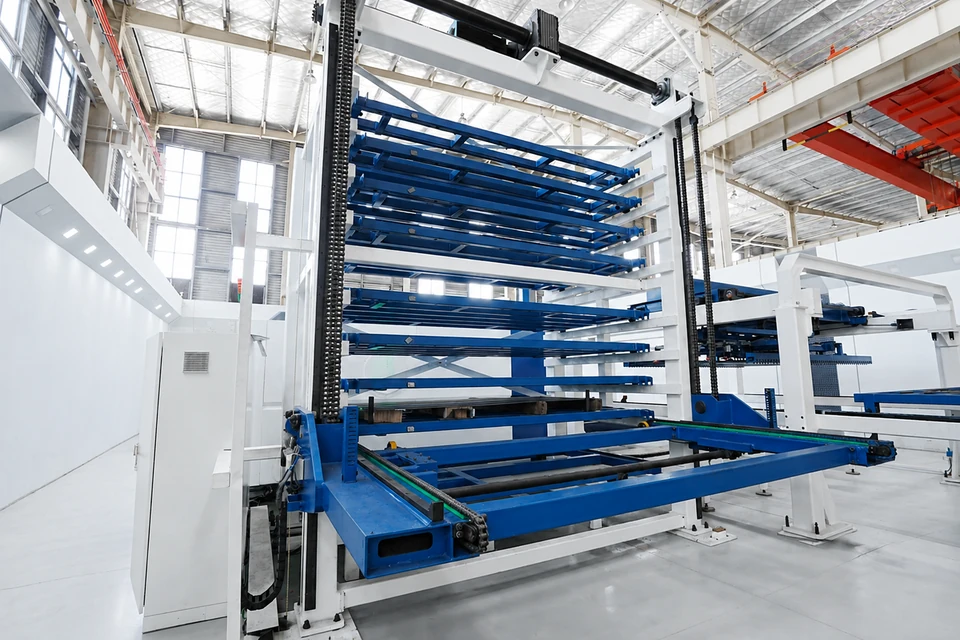
The tower retrieves the selected material. Magnetic separation, double-sheet detection and thickness measurement check the sheet before it reaches the laser.
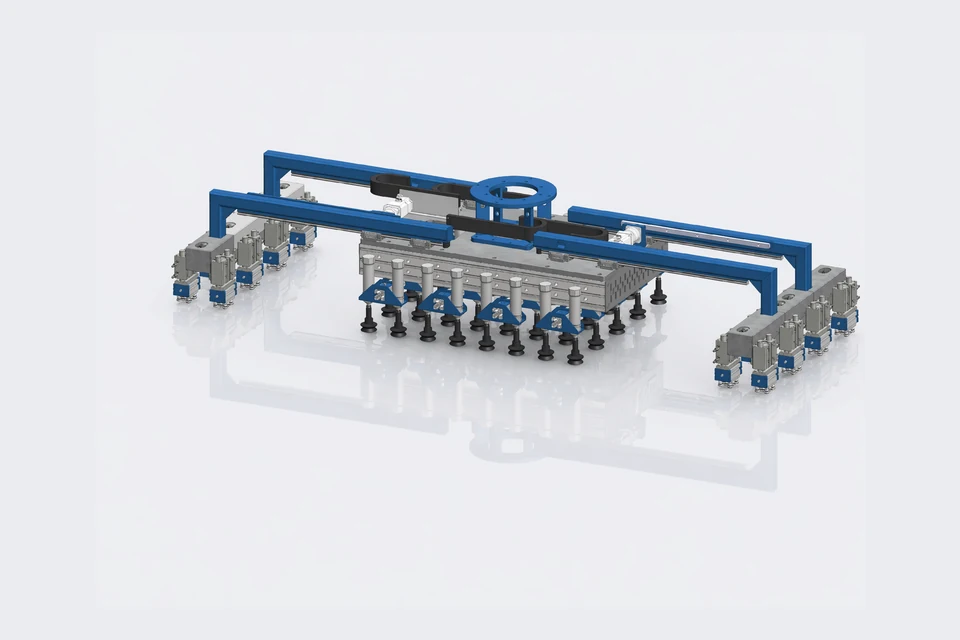
Vacuum pickup loads the sheet. Fork unloading supports the cut nest, while the sorting gripper picks individual blanks using suction zones matched to part shape. Skeletons and bypass parts need their own discharge route.
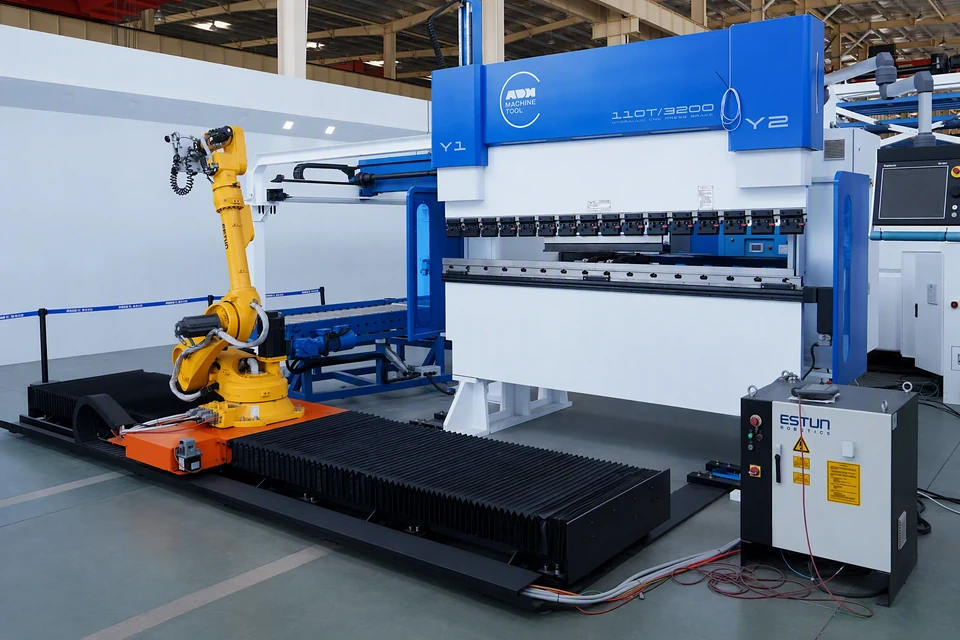
A centering station and turnover device set the blank orientation. The robot travels along a seventh-axis rail, presents the part to the tooling, regrips when required and transfers the finished part to its stack.
Line integration
Set tower storage, replenishment access, bypass routes and buffer positions from the sheet sizes and nest mix.
Keep nest IDs, part IDs and bend programs associated across cutting, sorting and bending. Define how the controller handles a rejected blank.
Run a production nest through to the finished stack. Measure throughput with changeovers, inspect bend quality and test restart at a transfer point.
Through the machine lifecycle
Find the training, maintenance guidance and parts support your team needs. Services and availability are confirmed for your machine and location.
Before start-up
Prepare utilities, lifting and the installation area, then coordinate start-up and handover.
Review installation supportBefore production
Build the operator, programming and maintenance skills required for your delivered machine.
Explore trainingIn operation
Get support with the machine model, serial number and a clear description of the issue.
Request technical supportPlanned spares
Identify your machine and component so our team can check compatibility and availability.
Request service or partsSelf-service
Find video guidance for operating and maintaining your ADH machine. Check relevance to your model and configuration.
Browse support videosContract scope
Your quotation or contract defines included services, warranty, exclusions and responsibilities.
Review service scopeProject enquiry
Tell us what you want to make or improve. Technical details and drawings can follow.
Contact ADH
Name, email and a short description are enough to begin.